
 Polski
 English
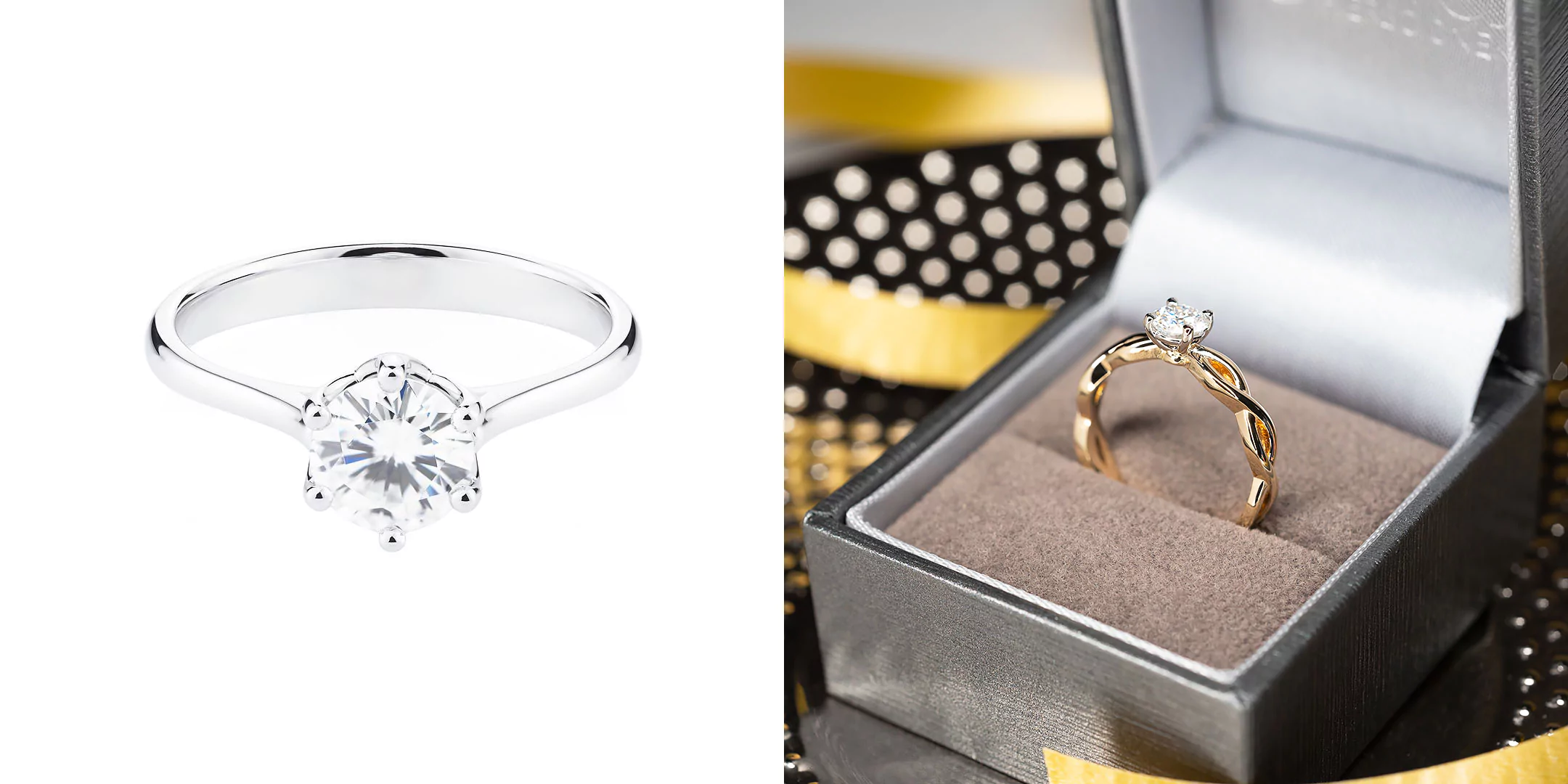
Moissanite (silicon carbide) is an extremely rare mineral. It was discovered by the French mineralogist and chemist H. Moissan in the Canyon Diablo meteorite in the USA. Due to its exceptionally rare occurrence in nature, it has been synthetically produced since the 1960s. It appeared in jewelry in the late 1990s. In 1998, Charles & Colvard received a patent for the production of silicon carbide. The patents expired in August 2015 in the USA and in 2016 in most other countries. As a result, the availability and popularity of moissanites have significantly increased.
Moissanite is an excellent alternative to diamonds. It is a synthetic stone with similar properties to the much more expensive diamond. Moissanite is characterized by the highest light dispersion ability - dispersion. Properly cut minerals with high dispersion shimmer in various colors due to the refraction of light. It is also characterized by a perfect brilliance effect - this is a light phenomenon in the form of shimmering multicolored flickering reflections. Moissanite is the hardest mineral after diamond - from 9.25 to 9.50 on the Mohs hardness scale. This means that the only gemstone that can scratch moissanite is a diamond.